How to use the Patient Visit Summary Feature
Last updated October 24, 2025
The patient visit summary provides healthcare providers with a structured, patient-friendly overview of the current visit that can be referenced during the encounter or shared directly with Veterans to enhance their understanding of their care.
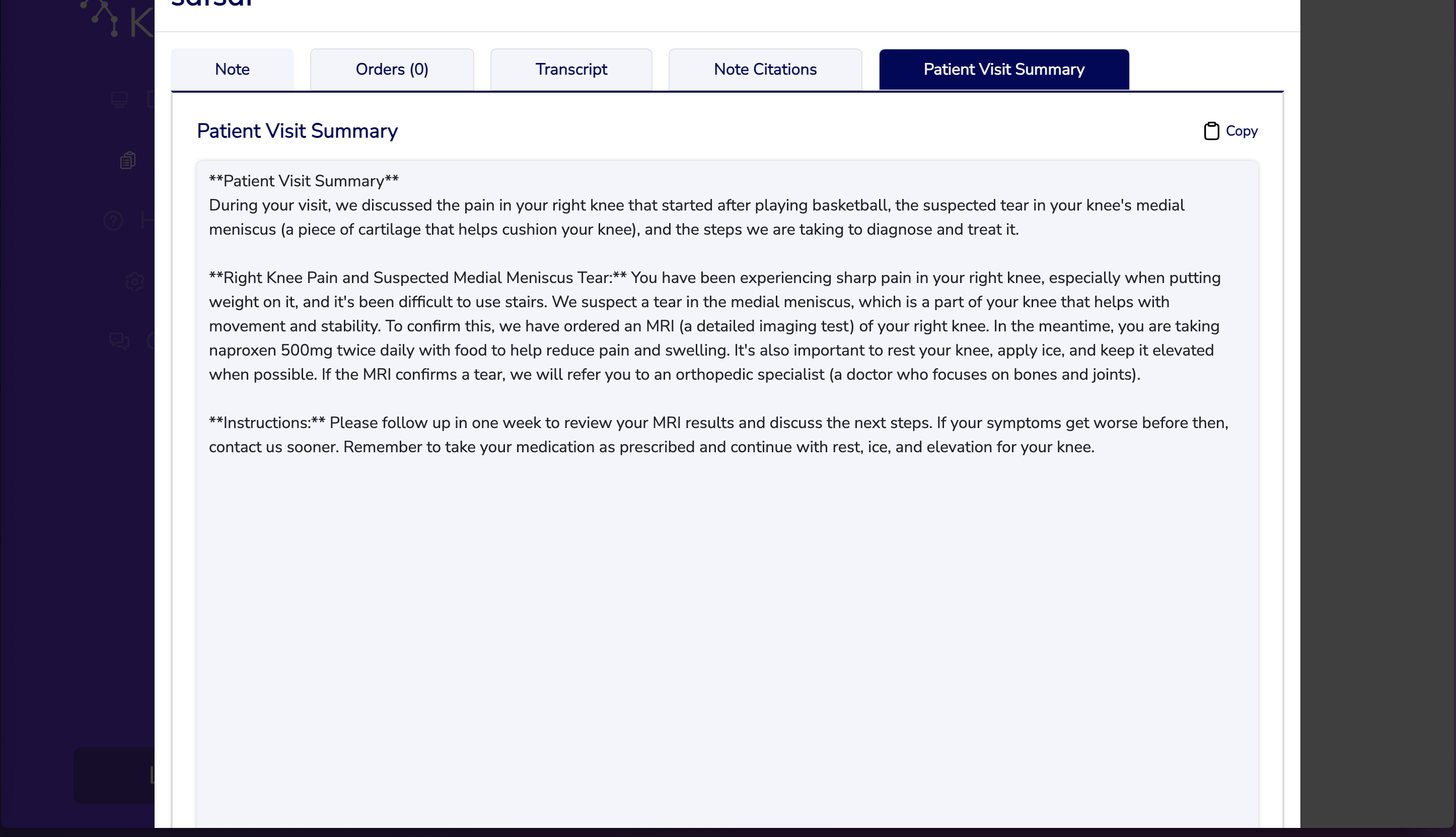
What the summary includes:
- Opening context that frames the visit's main focus and discussion points
- Condition-specific sections with clear headings for each health issue addressed
- Symptoms and clinical findings explained in accessible language
- Medical terminology with plain-language explanations (e.g., "medial meniscus (a piece of cartilage that helps cushion your knee)")
- Diagnostic tests ordered with explanations of their purpose
- Current medications with specific dosing instructions
- Self-care recommendations and home management strategies
- Instructions section with clear follow-up care, appointment scheduling, and when to seek additional care
Key characteristics:
- Patient-centered language: Uses clear, non-medical terminology with explanations for clinical terms
- Structured format: Organized with bolded headers for easy navigation
- Actionable information: Includes specific instructions Veterans can follow
- Educational focus: Helps Veterans understand their condition and treatment plan
- Reference-friendly: Formatted for easy sharing and retention
This feature is particularly useful for:
- Improving Veteran's comprehension of their care plan
- Reducing post-visit confusion about instructions
- Supporting medication compliance and self-care
- Enhancing Veterans' engagement in their treatment
- Providing a take-home reference for Veterans and families
- Ensuring consistent communication of care plans
Access and usage: Providers can review the summary during visits to ensure all key points are covered and share it with Veterans to reinforce education and care instructions.
Note: This summary translates clinical information into patient-friendly language and is separate from clinical documentation or full visit transcripts.
Was this article helpful?